
Straight Line
Euclid Axioms
1. For any two points a straight line will exist containing them.
2. A finite straight line is part of a straight line.
3. A circle with any centre and distance exists.
4. All right angles are equal to one another.
5. The parallel postulate:
If a straight line falling on two straight lines make the interior angles on the same side less than two right angles, the two straight lines, if produced indefinitely, meet on that side on which are the angles less than the two right angles.
A median of a triangle is a line joining a vertex to the midpoint of the opposing side.
The center of gravity of a triangle is found on all three medians.
Basic formulas for area of a triangle
Where
is the angle between the sides
and
.
The polar coordinate system is a two-dimensional coordinate system in which each point on a plane is determined by a distance from a fixed point and an angle from a fixed direction.
Two straight lines are perpendicular if the angle between them is 90 degrees.
Analysis of the Straight line and the Area of a Triangle
Definition
The notion of line or straight line was introduced by the ancient mathematicians (Euclidean geometry) to represent straight objects with negligible width and depth.
Euclid (ancient greek mathematician) described a line as "breadthless length".
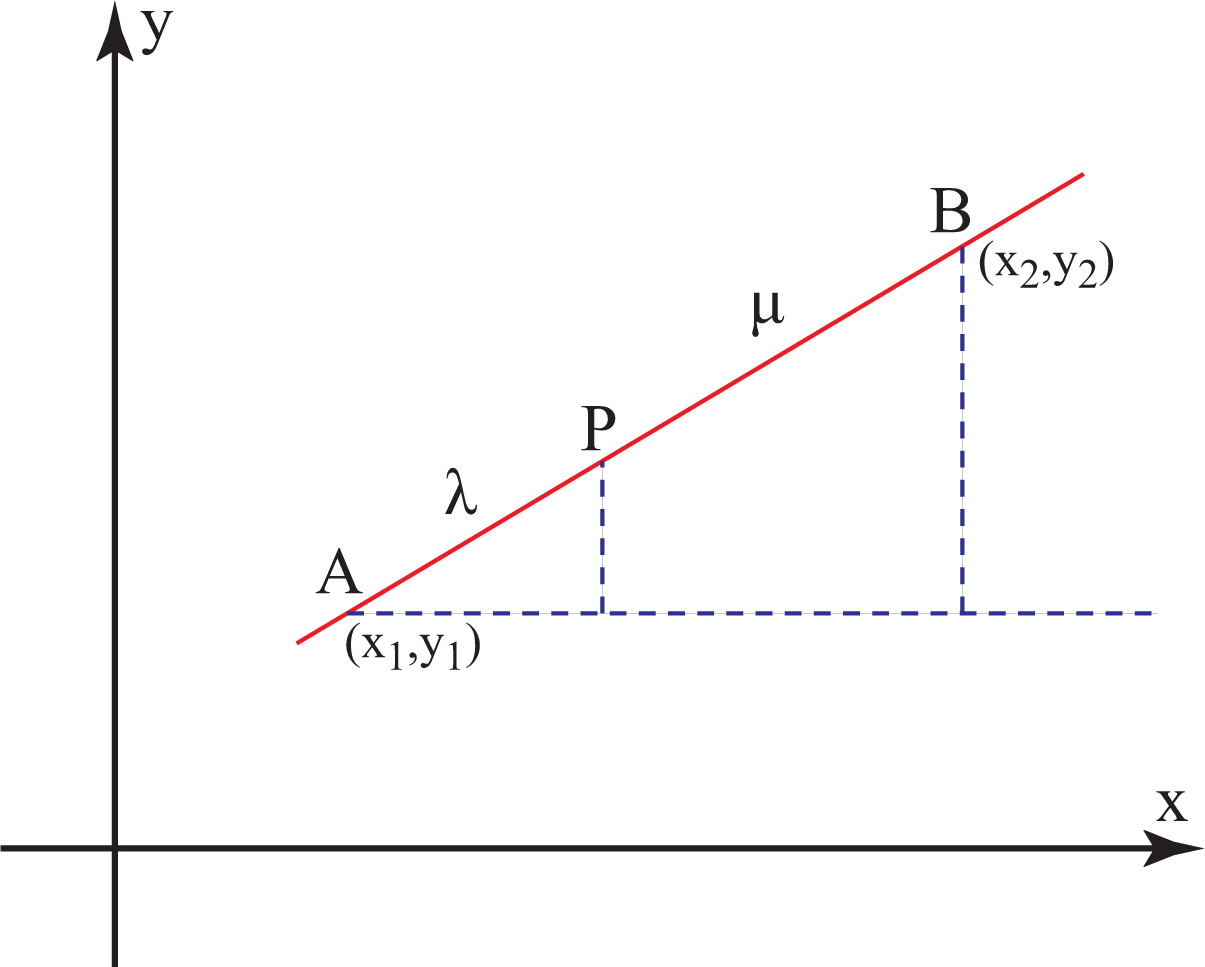
By using Pythagoras, the distance between the points and
can be found from:
And the gradient of the line is given by:
Coordinates of a Point Dividing a Line AB
Suppose the coordinates of the required point P are that divide a line
in the ratio of
.
Then by parallels:
and so
Similarly for the y coordinate and so the coordinates of are:
and
Note If is not between
and
, the ratio
is negative and the same formula holds good, provided that
is taken to be negative. As a particular example. Putting the ratio as 1 gives the coordinates of the mid point of the line as:
and
Centre of Gravity for a Triangle A B C
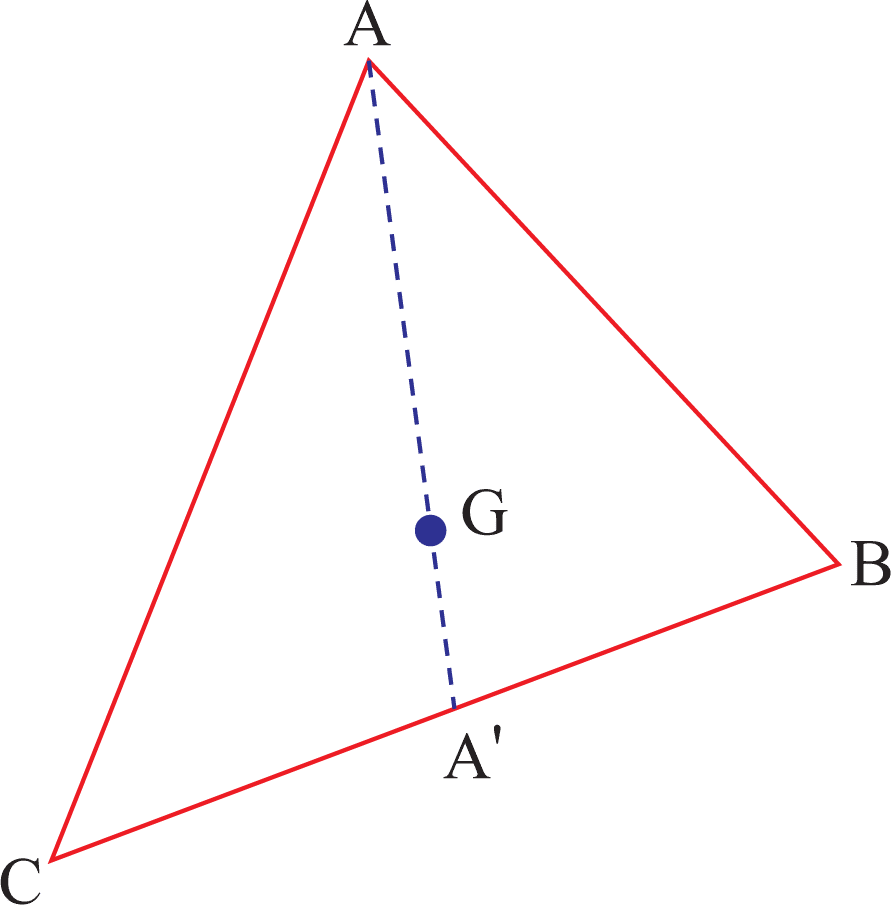
If is the mid point of
But
divides
in the ratio of
. The coordinates of
are therefore :
The y coordinates follow in a similar manner and so
- Each coordinate of the centre of gravity of a triangle is one third of the sum of the coordinates of the vertices.
The Area of the Triangle A B C
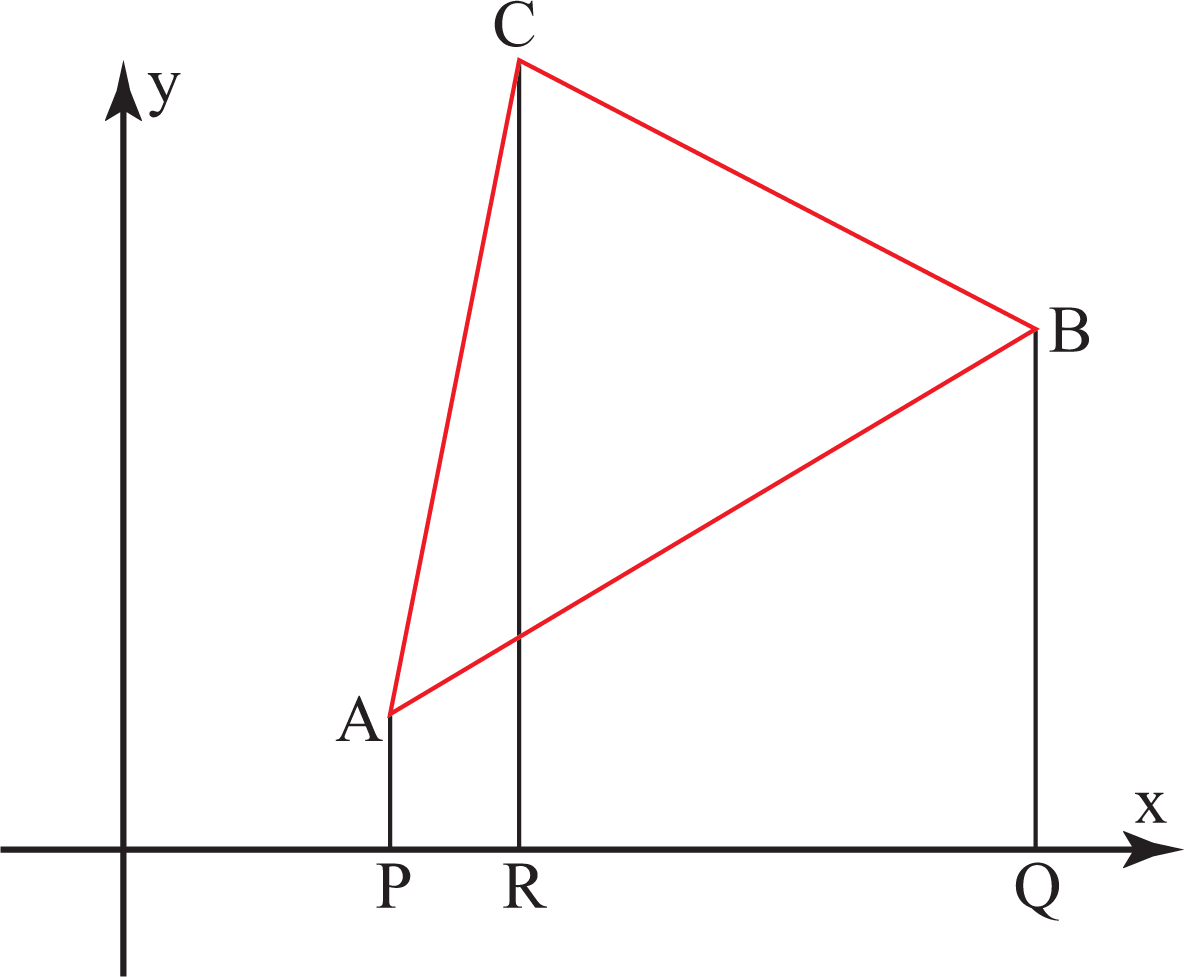
From the diagram it can be seen that:
Note It often helps to use the particular form of this equation when C becomes the Origin.
The area of this triangle is then given by:
The Equation of a Straight Line
If is a point on the line joining
and
, the area of the triangle formed by the three points is zero.
Therefore
Hence
This is therefore the equation of a straight line joining the points and
and since it is of the first degree in
and
, it also shows that any straight line must be represented by an equation in the first degree.
Since is the gradient of the line , it's equation may be written as:
Where is the gradient of the line.
Intercept Form
To find the equation of the line which makes intercepts and
on the axes. We want the line joining
to
. So the equation is:
i.e.
therefore
Gradient Intersect Form
To find the equation of a straight line of gradient m which makes an intercept on the
axis.
The intercepts are obviously and
and so the equation is given by:
therefore
The Polar Form
To find the equation of a straight line such that the from the origin is of length p and makes an angle with the x-axis.
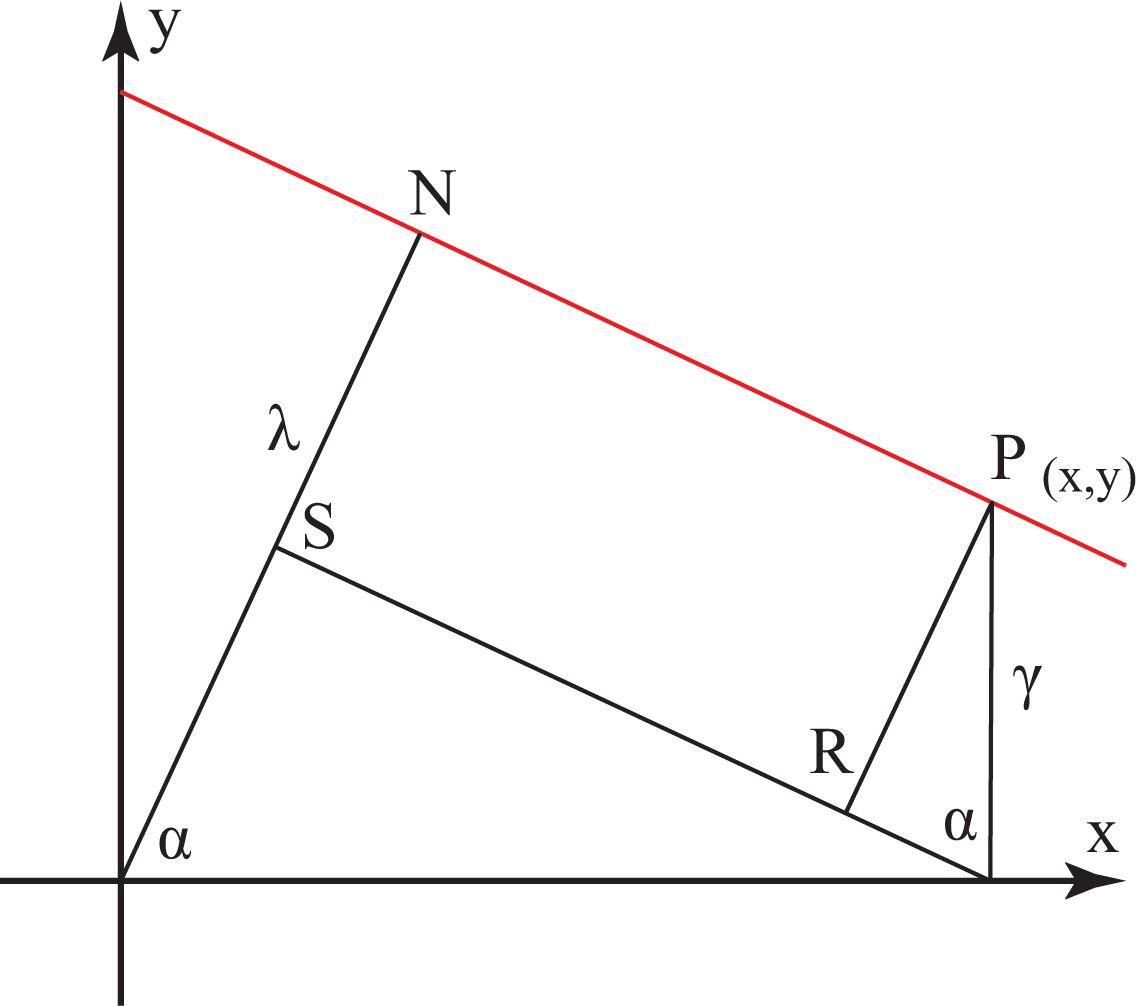
If are the coordinates of any point on the line. From the diagram we can see that :
therefore
This then is the equation required.
The Angle Between Two Lines.
To find the angle between to lines of gradient and
.
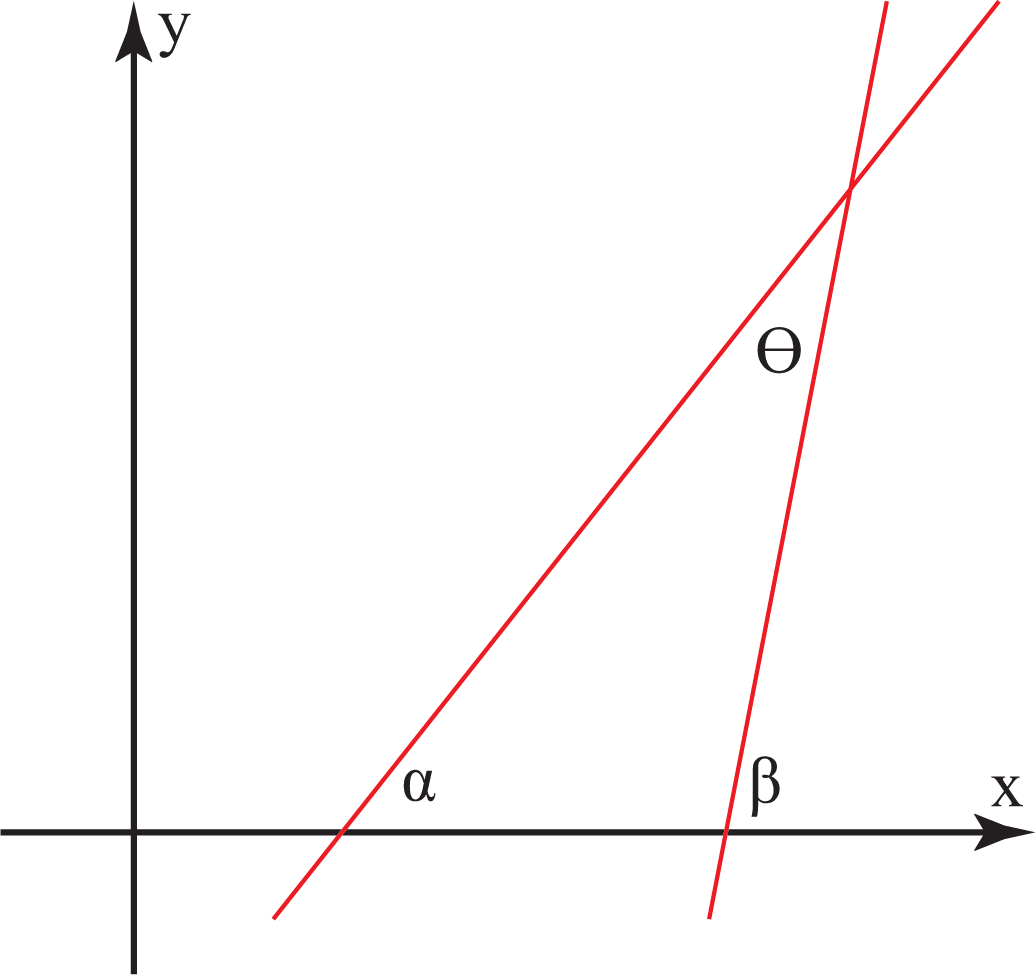
From the diagram it can be seen that:
therefore
But since and
If the lines are parallel, since is zero,
and if the lines are perpendicular,
since is infinite,
i.e. The product of the gradients of perpendicular lines is .
Example 1
Write down the equation of the line through which are parallel and perpendicular to
For the parallel line keep the and
terms unaltered. The equation required is
and since the line passes through
, the value of
can be found by substituting
and
in the equation.
The parallel line is thus :
For the perpendicular line, interchange the coefficients of and
and alter the sign between them. The line becomes
and as before the value of the constant is found by
substituting and
.
The equation of the perpendicular line is therefore:
The Length of the Perpendicular
To find the length of the perpendicular from to the line
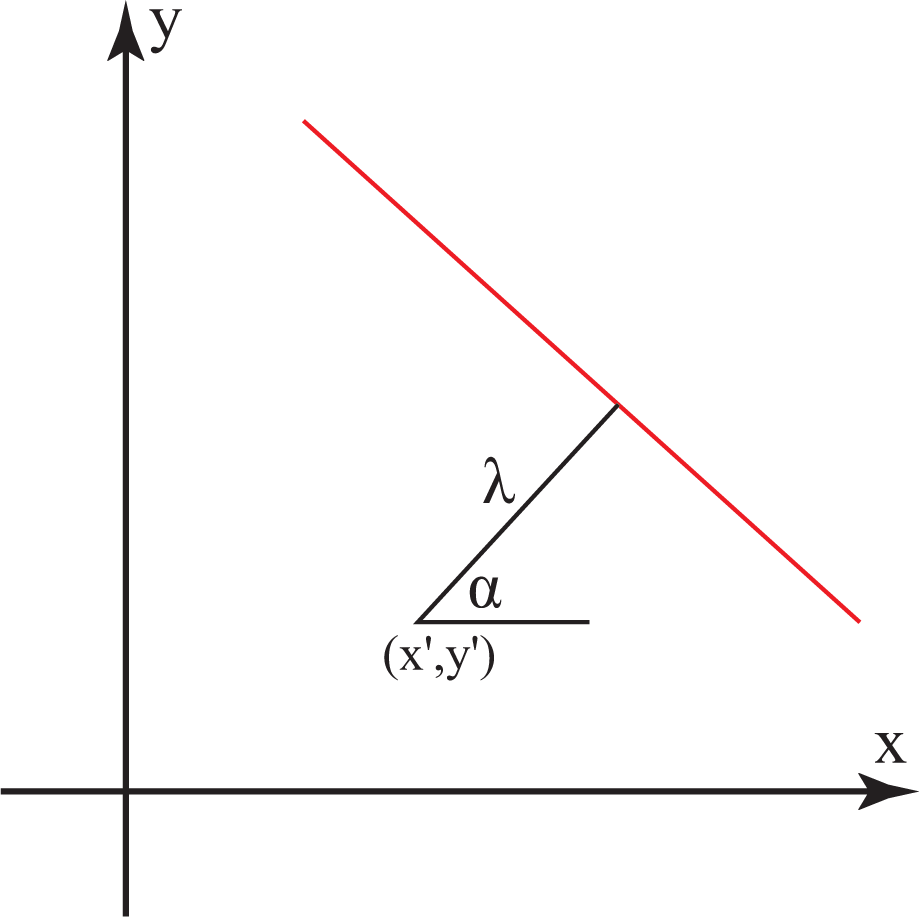
Suppose that the perpendicular makes an angle with the
axis. If the length of the perpendicular is
then the coordinates of it's foot are:
and
This point lies on the line and therefore:
or
But since the product of perpendicular lines is
and therefore
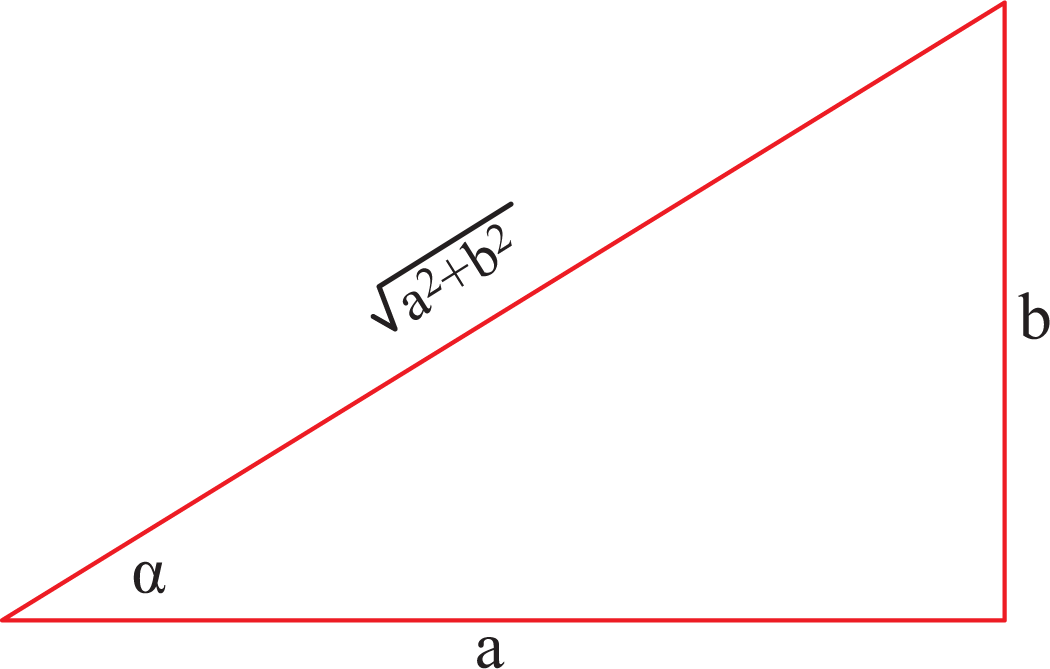
therefore
Note
The minus sign is of no great significance in itself ( Since we have a square root in the denominator) but the comparison between the signs of the perpendicular is of the utmost importance. If these perpendiculars are of the same sign, the points are on the same side of the line. If they are of different signs the points are on opposite sides. The square root of the denominator is assumed to have it's positive value throughout and so will not affect the comparison. Hence all we need to do is to substitute the points in the lines themselves.
Example 1
Are the points and
on the same side or on opposite sides of the line
.
If ,
then the value of
is
i.e.
If ,
then the value of
is
i.e.
So the points are on either side of the line.
Angle Bisectors.
An angle bisector is a straight line which cuts the angle into two equal angles.
To find the equation of the angle bisectors between the lines and
Use the geometrical property that the perpendiculars from any point on either angle bisector to the two lines are equal.
therefore
These are the required pair of lines.
It is sometimes necessary to distinguish which of these is the internal and which is the external bisector and a method of doing this is shown in the following example.
Example 1
Find the incentre of the triangle formed by the following three lines:
and
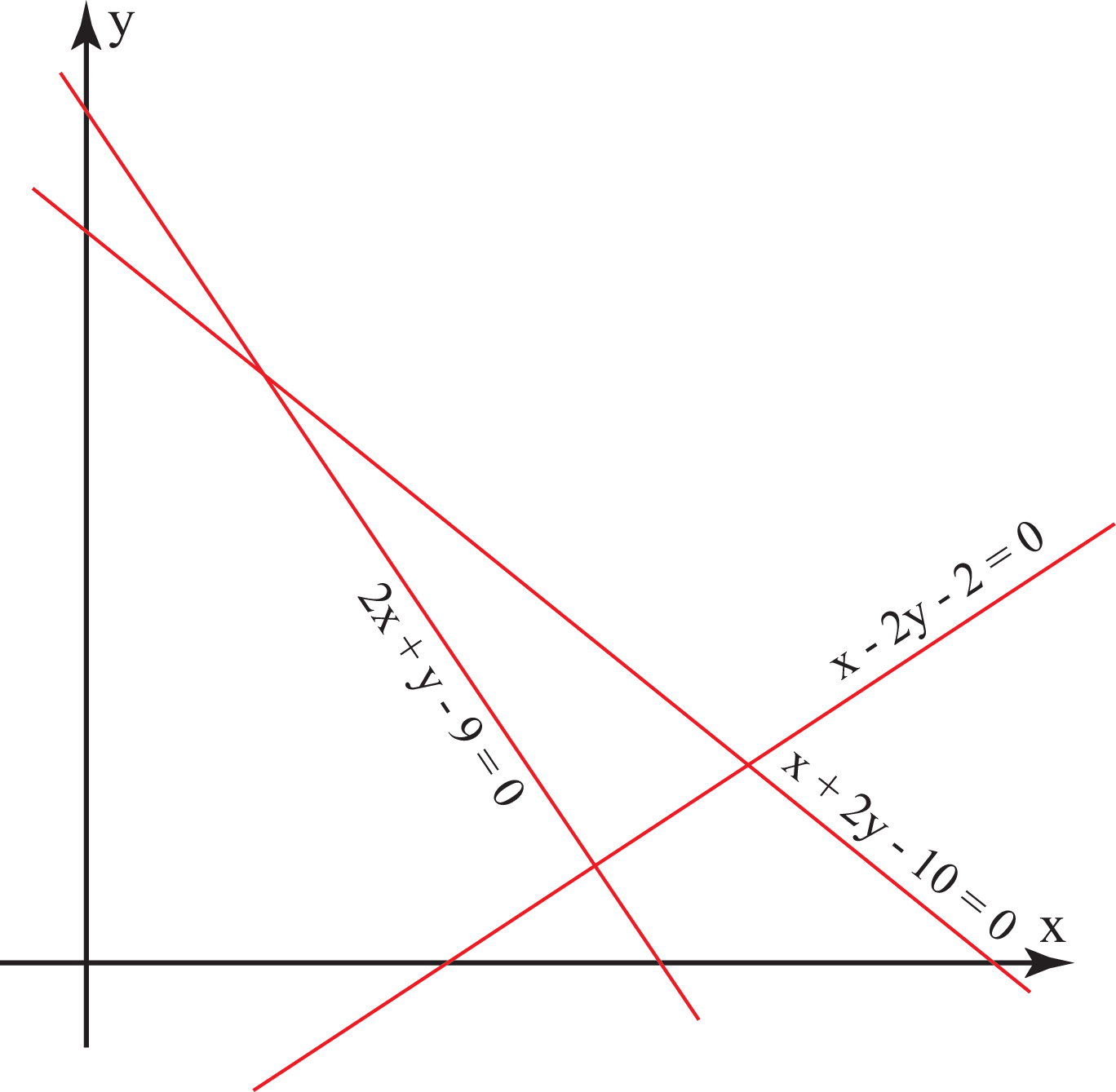
It is helpful to draw a diagram showing the relative positions of the lines. If is the incentre the length of the perpendicular from
to the line
is given by:
If the coordinates of the origin are substituted into this , the result is a negative quantity but (x,) and the origin are on opposite sides of the line and so:-
The perpendicular from to the line
is given by:
The origin substituted in this will give a negative expression and as and the origin are on the same side.
The perpendicular from to the line
is given by:
The origin substituted in this expression gives a negative quantity and since and the origin are on the same side :
therefore
From which and
Solving these two equations gives the coordinates of the incentre as
Taking the alternative signs in the equations will give the ex-centres
A line Through the Intersection of Two given lines
If and
are the equations of any two straight lines , then
will represent e line passing through their point of intersection for all values of
.
Since and
are expressions of the first degree so must be
and therefore
must be a straight line. The coordinates of the point of intersection of
and
will make both
and
equal zero and this will make
. Therefore the line
passes through the point of intersection of
and
.
This is of particular use in finding the equation of the line which joins the point of intersection of two given lines to the origin.
Example 1
Write down the equation of the line which passes through and has a gradient of
Using the general equation for a straight line i e.
Substituting in the coordinates and
The equation becomes
Example 2
Find the equation of the line such as it's perpendicular to the origin is of length and makes an angle of
degrees with the
axis.
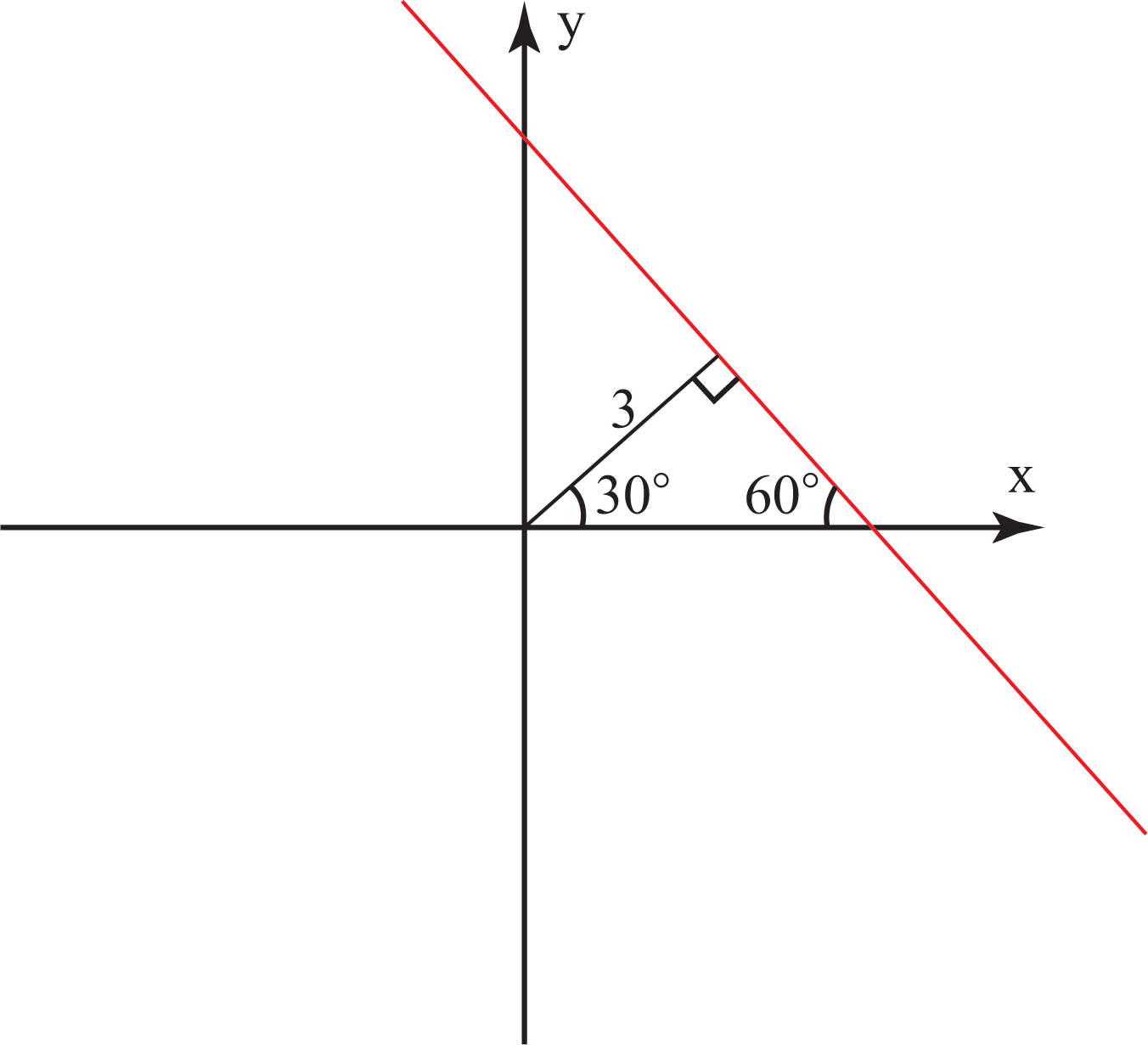
From the graph it can be seen that the required line passes through and
. It can also be seen that the gradient of the line is
Substituting in
From which , therefore