Trigonometrical Ratios
A triangle is one of the basic shapes of geometry: a polygon with three corners and three sides which are line segments.
An angle is the figure formed by two rays sharing a common endpoint, called the vertex of the angle.
Radian is the ratio between the length of an arc and its radius.
One radian is equal to 180/π degrees. Thus, to convert from radians to degrees, multiply by 180/π. Conversely, to convert from degrees to radians, multiply by π/180.
Describes the derivation of the basic ratios and their relationship one with another
Trigonometric Ratios for Any Angle.
A knowledge of the Pythagoras theorem and the properties of Similar triangles, is assumed.
Definition of the Basic Ratios.
Consider the two right angled triangles shown. As they are equiangular the following relationships exist between the lengths of their sides.
Diagram
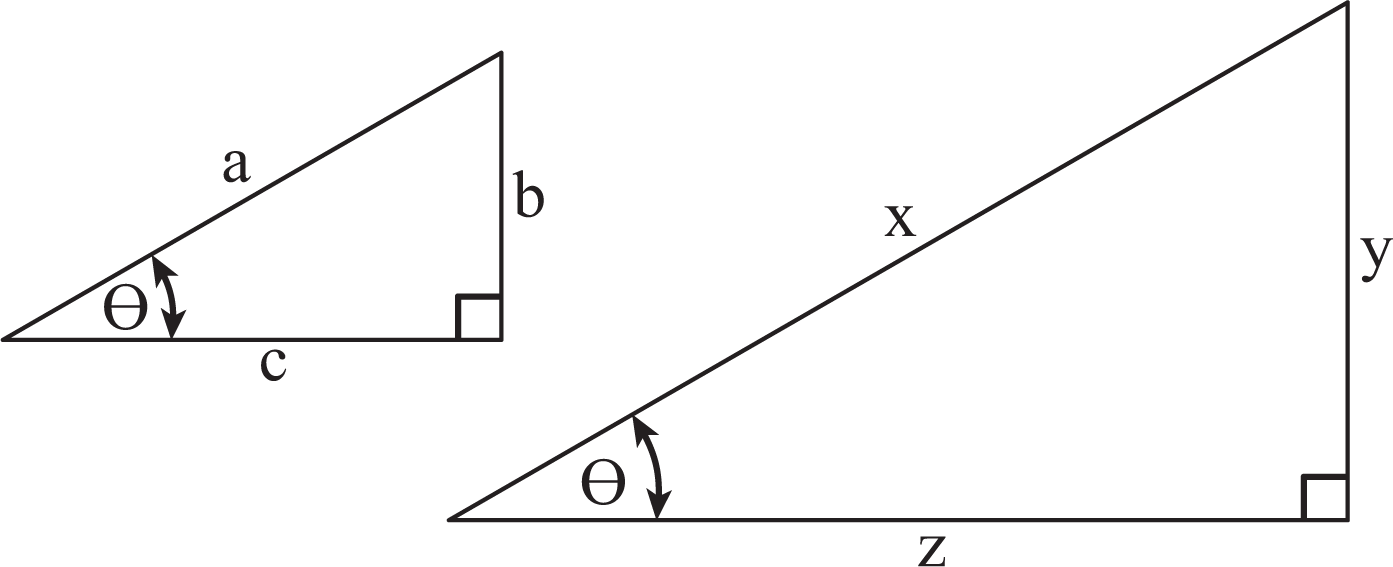
re-arranging we get
These two ratios are clearly independent of the size of the triangle and depend solely upon the size of the angles of a right angled triangle. By definition the value of equalities shown in equation (1) is called .
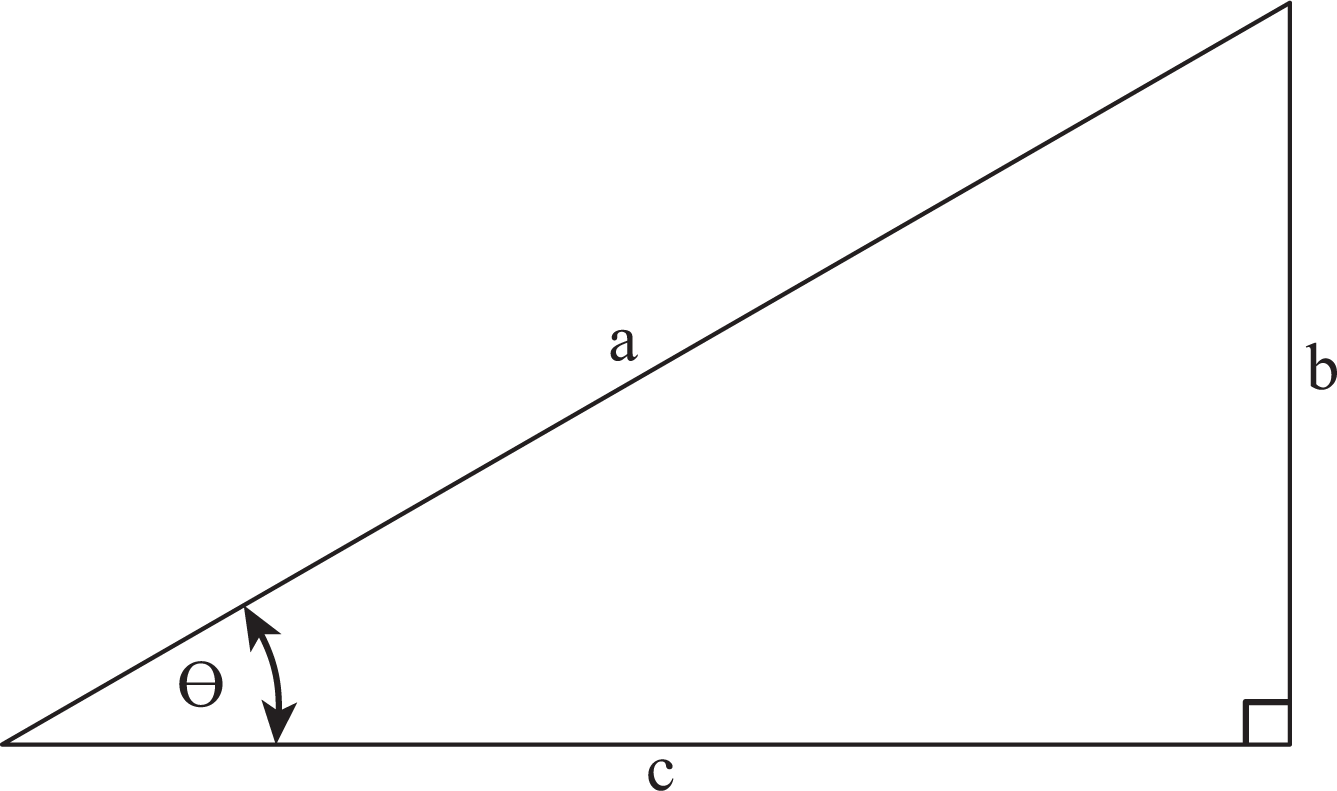
Using the same analysis two other ratios can be identified. These are and
and are called
and
respectively.
In Conclusion, considering the following right angled triangle:-
Other Identities
For convenience the following identities exist:
The relationships between Sin, Cos and Tan.
By Inspection of equations (2:3:4)it can be seen that
In addition if we put . The following diagram can be drawn. The two perpendicular Coordinates are
and
. The radius
is of unit length and the angle
is measured clockwise from
and the coordinates of
are defined as
whatever the position of
.
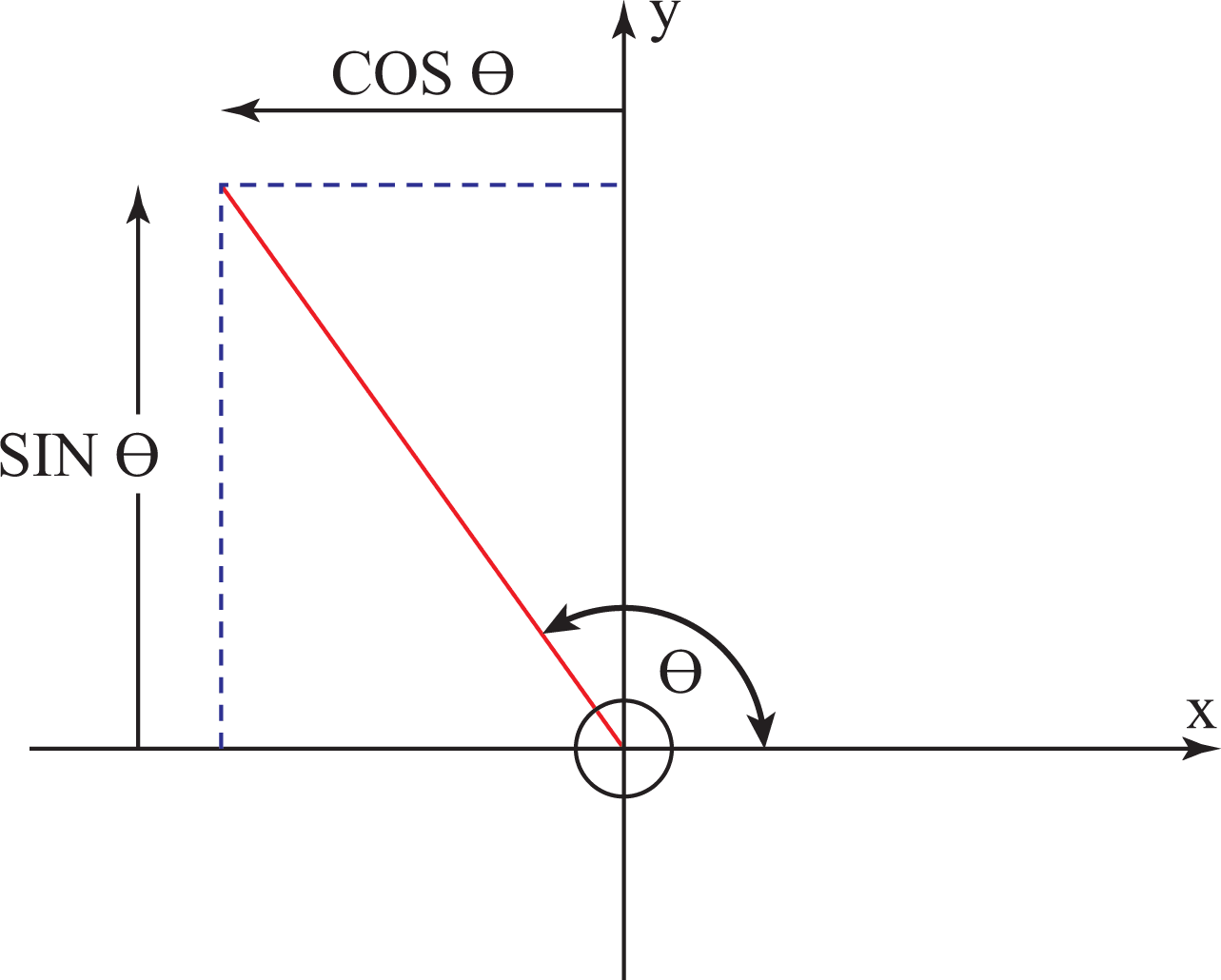
The signs are defined as in ordinary Algebraic graphs.
From the above Graph it can be seen that :
Dividing through by
Or dividing by gives:
Special Angles
From the definitions and from an inspection of the graph it is possible to rite down the Ratios for the following angles.
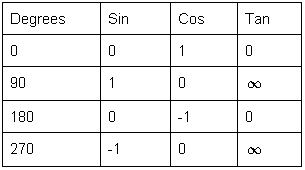
It can also be seen that and that as the sum of their squares = 1
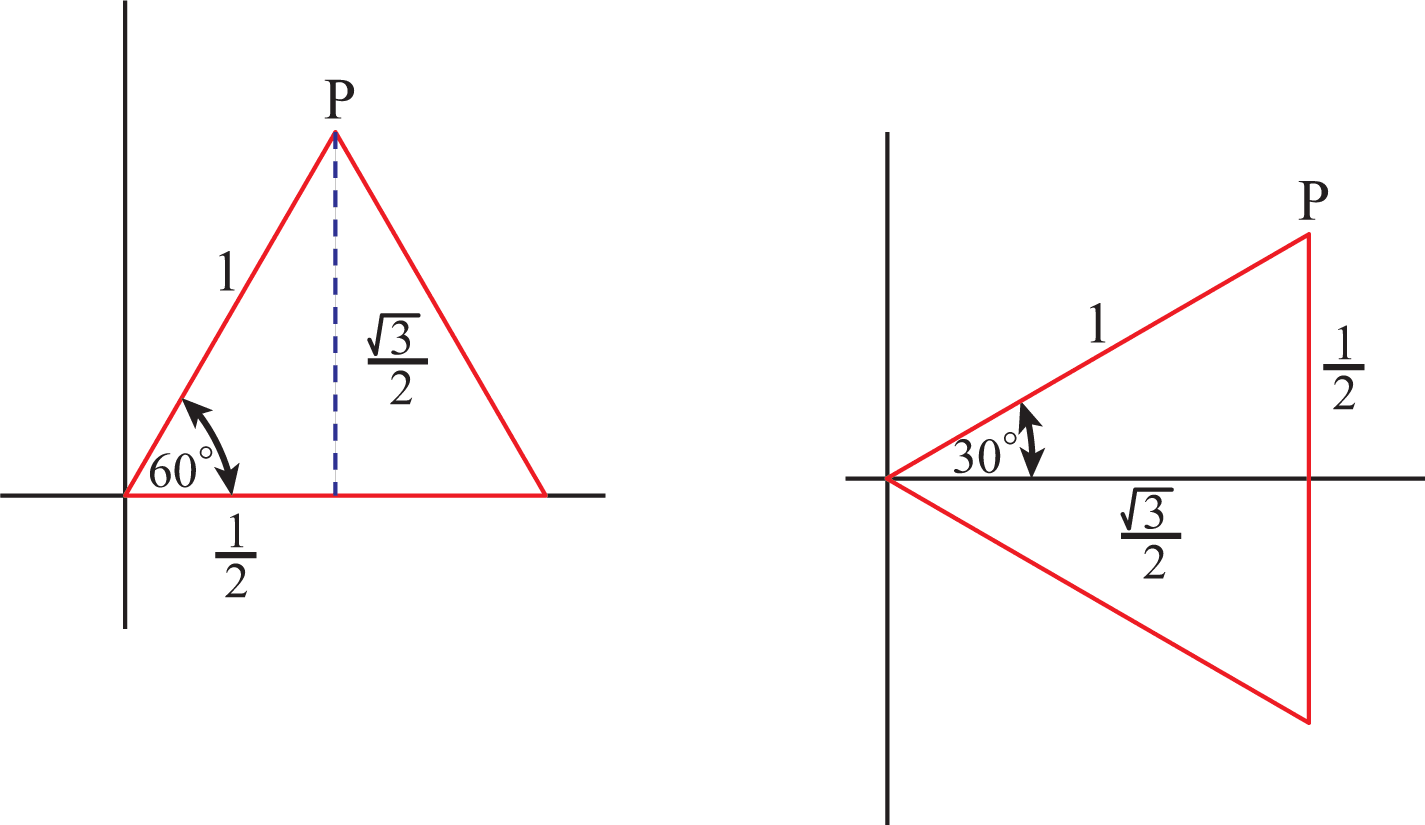
From the above diagrams it is possible to see that :
Similarly
Complementary Angles
If angles and
are complementary then Angles
and
are equal and so the projection of
onto the
axis is equal to the projection of
onto the
-axis.
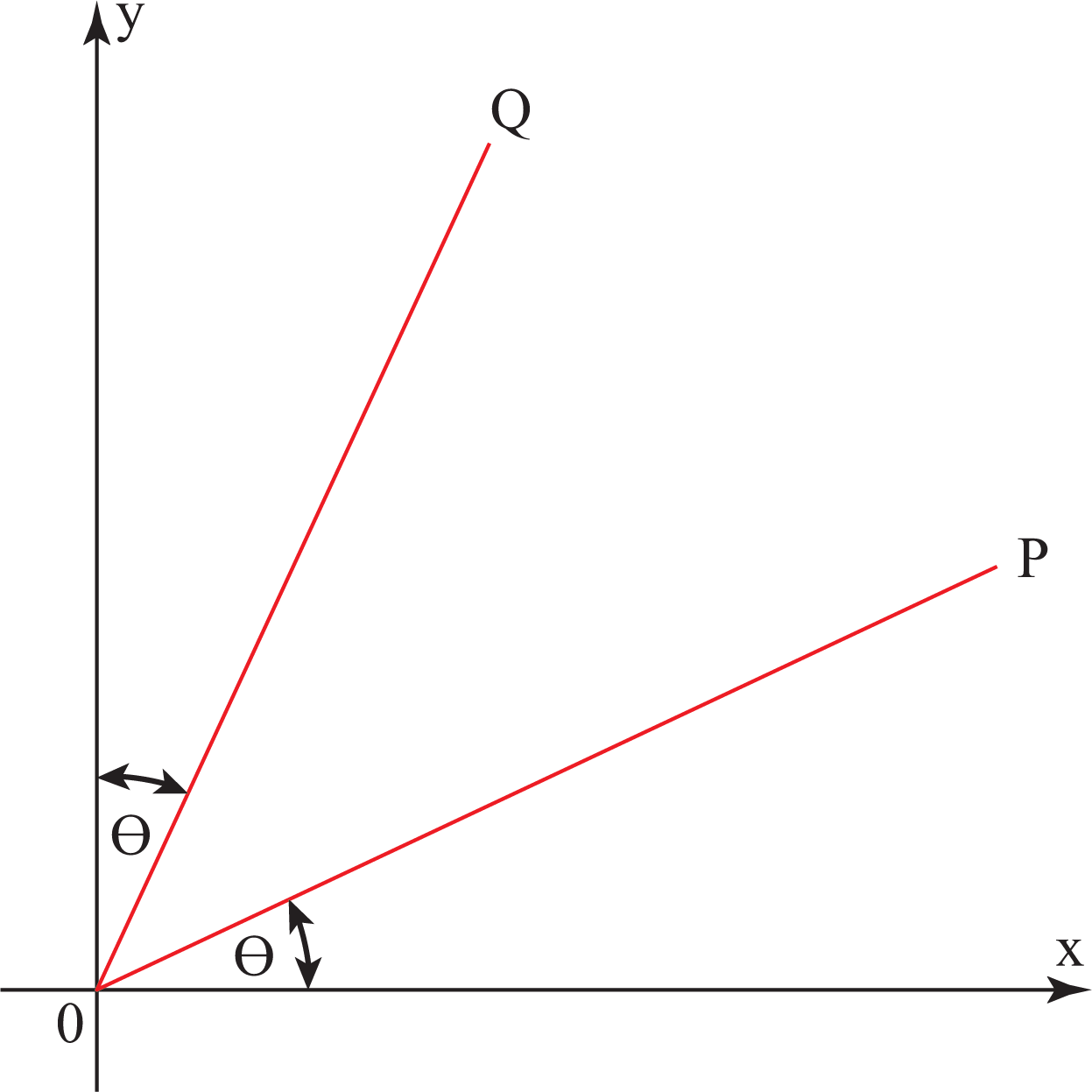
and similarly
NOTE The prefix co- in the ratios stands for "complementary" and means that the ratio of any angle is equal to the co-ratio of the complementary angle. e.g.
Angles larger than 90 degrees.
From the definitions and from the graph it can be seen that:
- In the first quadrant,
is +ve;
is +ve;
is +ve.
- In the second quadrant,
- In the third quadrant,
- In the forth quadrant,
There are various methods of remembering the above table. One way is by using the CAST diagram.
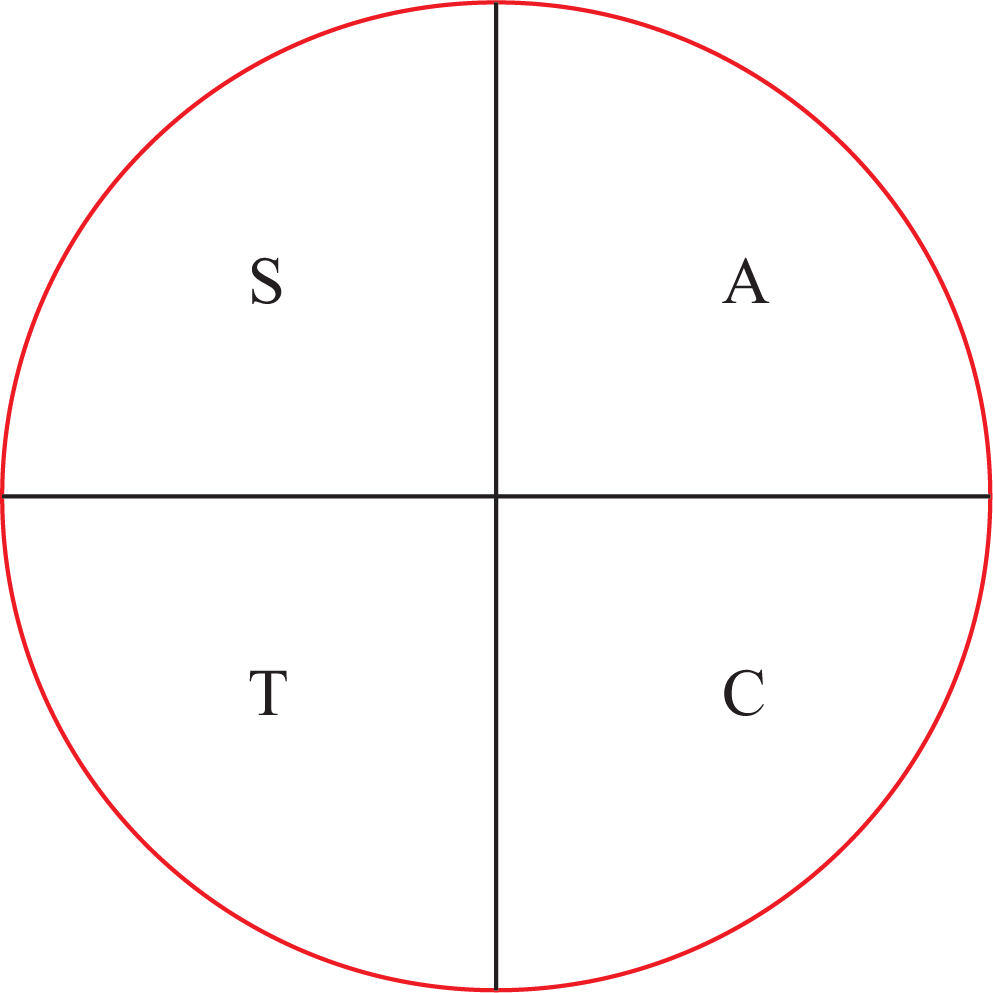
Each letter stands for the positive ratios. e.g. In the first quadrant all ratios are positive whilst in the third quadrant only tan is positive.
Since the magnitude of the projections of the unit radius on the axies depend solely on the acute angle which the radius makes with the -axis, any ratio of any angle is equal numerically to the same ratio of the acute angle which the radius makes with the
-axis. The sign must be found from the Cast circle.
Example 1
Find the value of degrees.
As 210 is in the third quadrant the sin is negative and the acute angle which the radius makes with the -axis is 30 degrees.
Example 2
To simplify expressions such as follow the same logic but for simplicity imagine that
to be acute. The formula will apply for all values of
but the argument is simplified by supposing that it is acute.
Examples
It should be noted that ;
; and
follow the same rules as
;
; and
respectively since they are their reciprocals.
Example 3
Prove the following identities:-
a)
b)
c)
a)
b)
c)
The Graphs of the Trigonometrical Ratios
In defining the ratios the following graph was used.
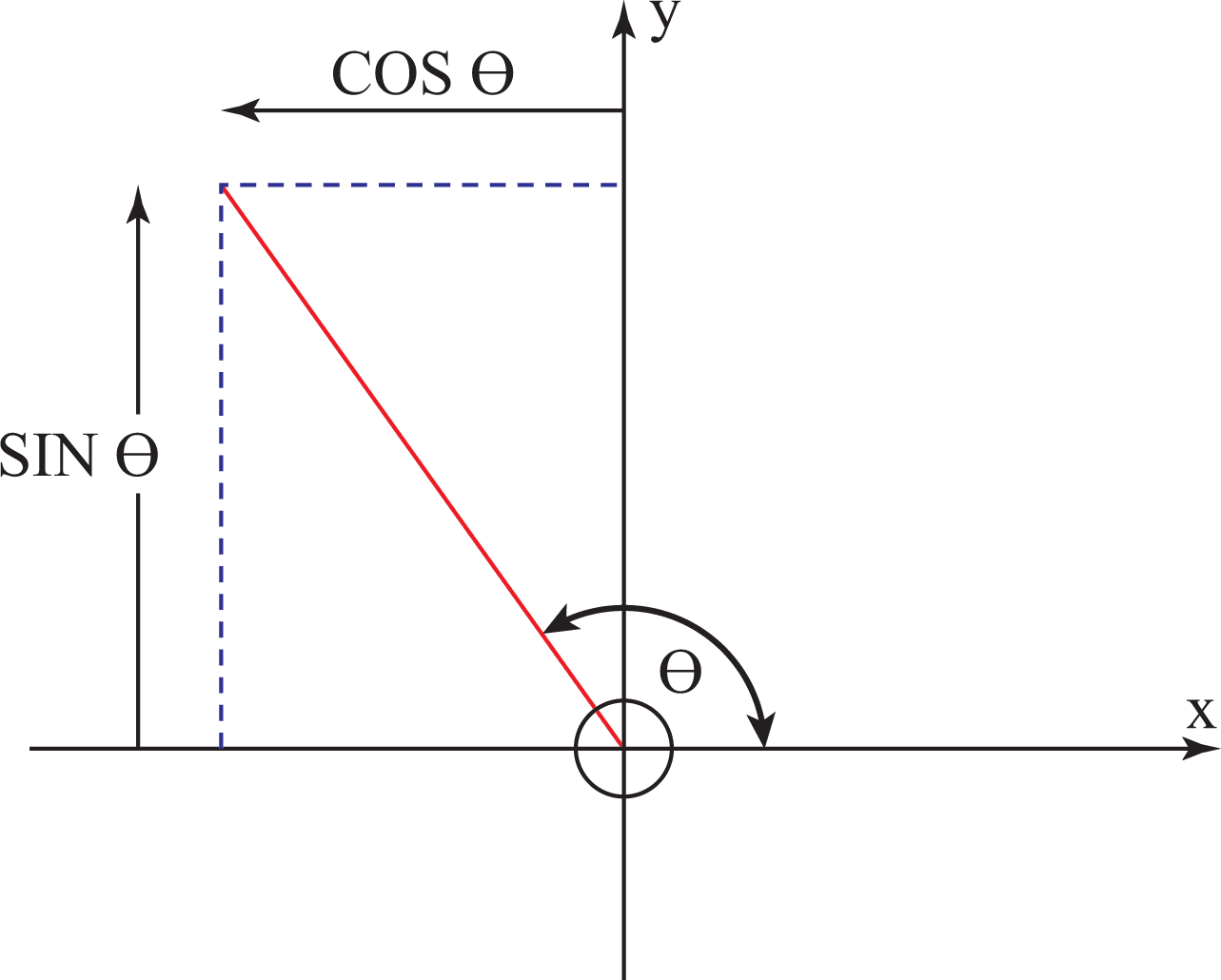
It can be seen that the value of is given by the
-ordinate.
Thus by drawing a circle of unit radius, the value of the sin of any angle can be found. In this way the following graph was drawn. On the left hand circle
is measured from
in an anticlockwise direction whilst on the right hand graph
is measured along the
axis in the normal way.
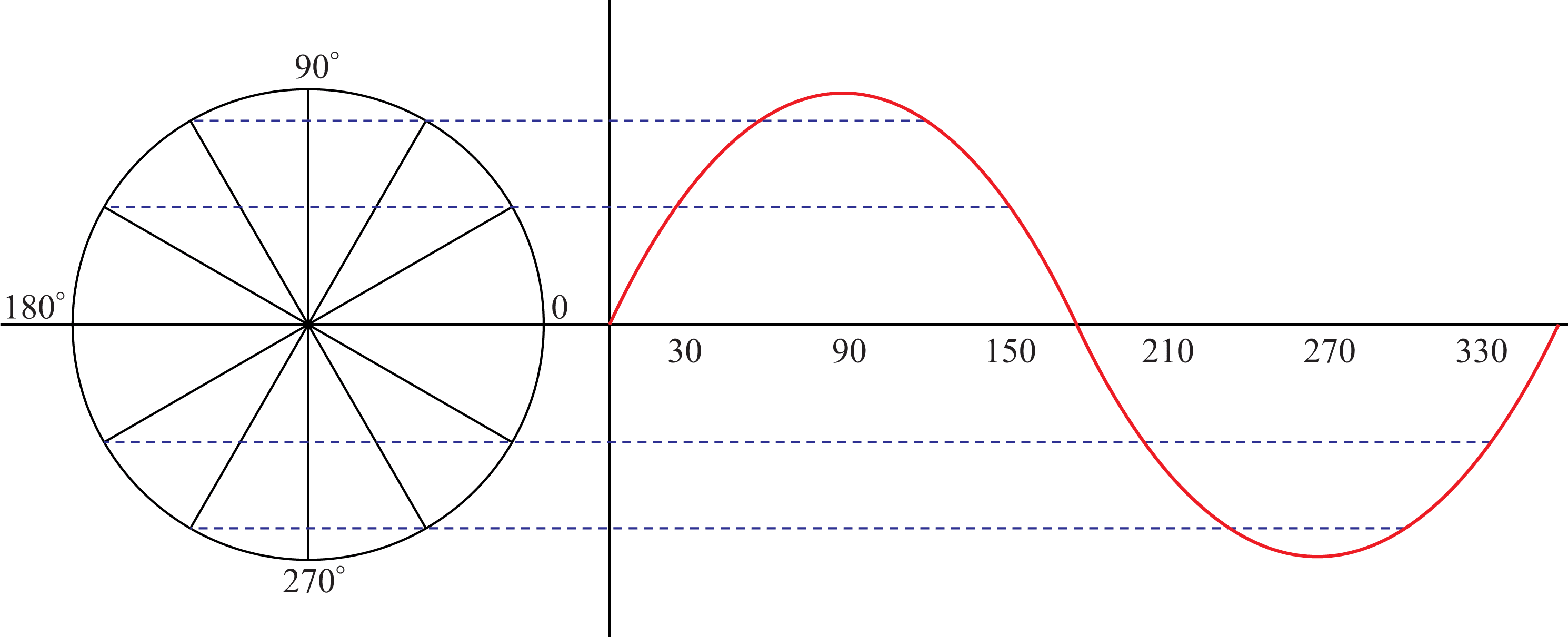
The values taken by the cosine as the angle increases from 0 to 90 degrees will be the same as those taken by the sine as the angle decreases from 90 degrees to 0. The two graphs are identical in shape and magnitude but displaced by 90 degrees.
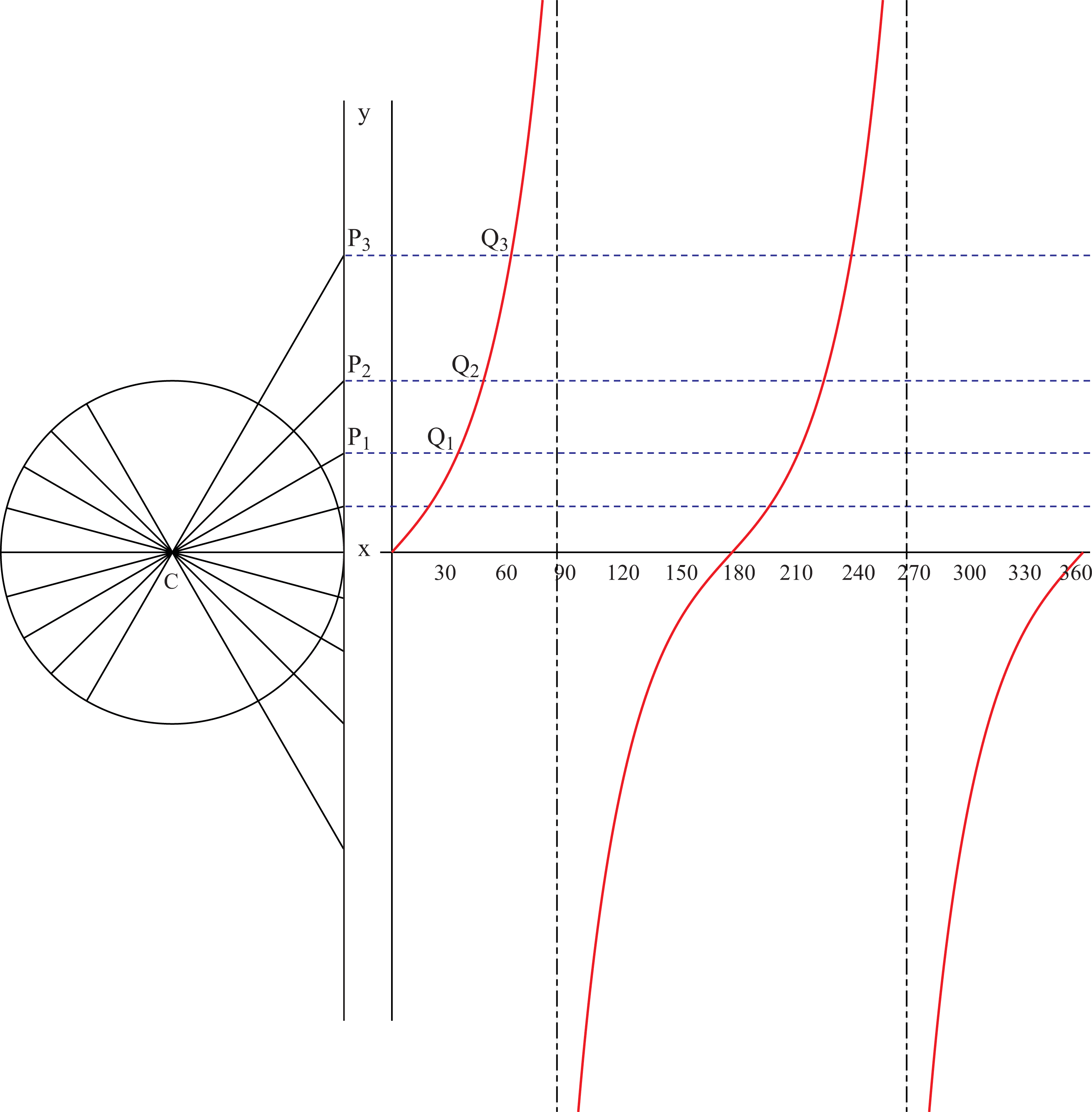
To construct the graph of is slightly more complicated. By inspection it can be seen that as:-
The tan of the angle will be infinite whenever the cosine is zero.
To construct the graph, is drawn at unit length. The points
are marked off on the line
and correspond to the various angles chosen for
. If a point
is plotted such that its abscissa on
is equal to the number of degrees in the chosen angle
. This process is repeated for each value of the angle
.