
Introduction
An Introduction to the terms and definitions used in Differential Equations with a simple example from Dynamics
You're viewing an older version of this page (#3395). View the current version.
Introduction
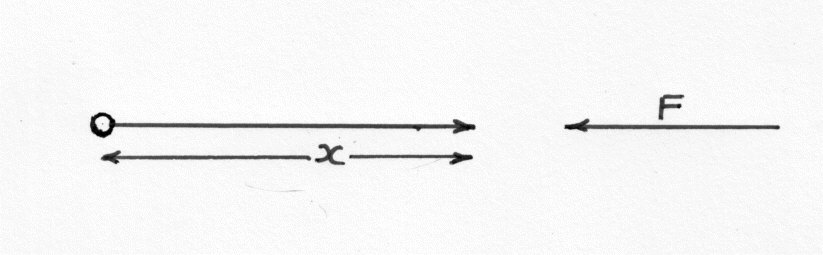
Before entering the world of Differential Equations it might be instructive to study an example from Mechanics which shows how an equation might arise.
Example 1
A particle is projected horizontally ( Gravity is neglected)
Types of Equation
The following are a selection of simple equations which are given here to illustrate types and terminology.
All of which involve differential coefficients are called Differential Equations
Definitions
Differential Equations which involve only one independent variable like (1) (2) (3) and (4)are called Ordinary. In these equations x is the independent variable and y is the dependent variable.
Equations which involve two or more independent variables and partial differential coefficients with respect to them ( example 5) are called Partial .
- Order.
Equations, like (1) which involve a second differential coefficient but none of higher orders is said to be {second Order. (4) is of the first order, (3) and(5) are of the second and (2) of the third order.
- Degree.
The degree of an equation is the degree of the highest differential coefficient once the equation has been made rational and integral as far as the differential coefficients are concerned. Thus (1) (2) (4) and (5) are of the first degree. Equation (3) must be squared to make it rational. Once this has occurred it can be seen that has been squared and hence the equation is of the second degree.
Note that this definition of degree does not require x or y to occur rationally or integrally.
The Geometrical Meaning of a Differential Equation.
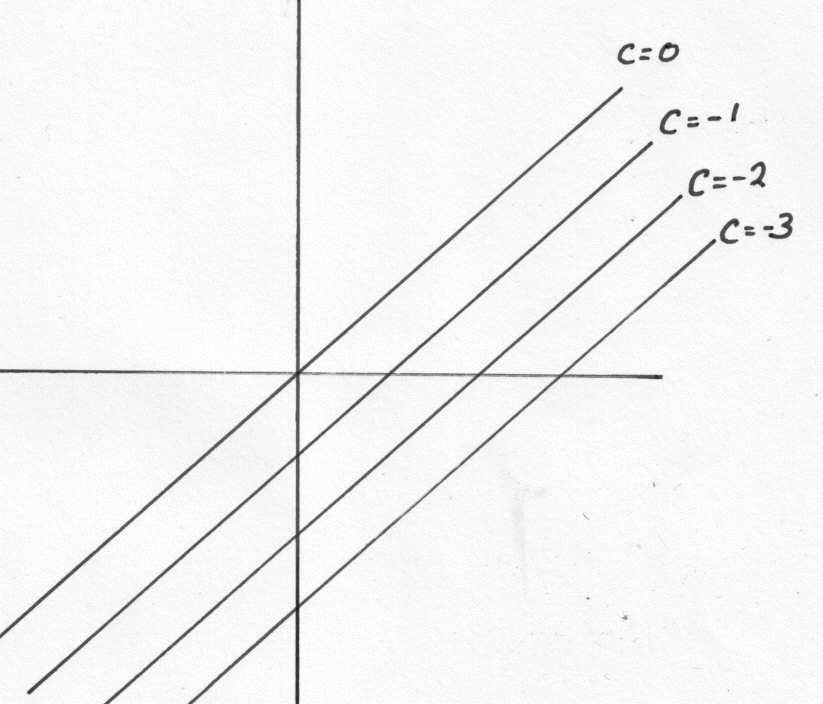
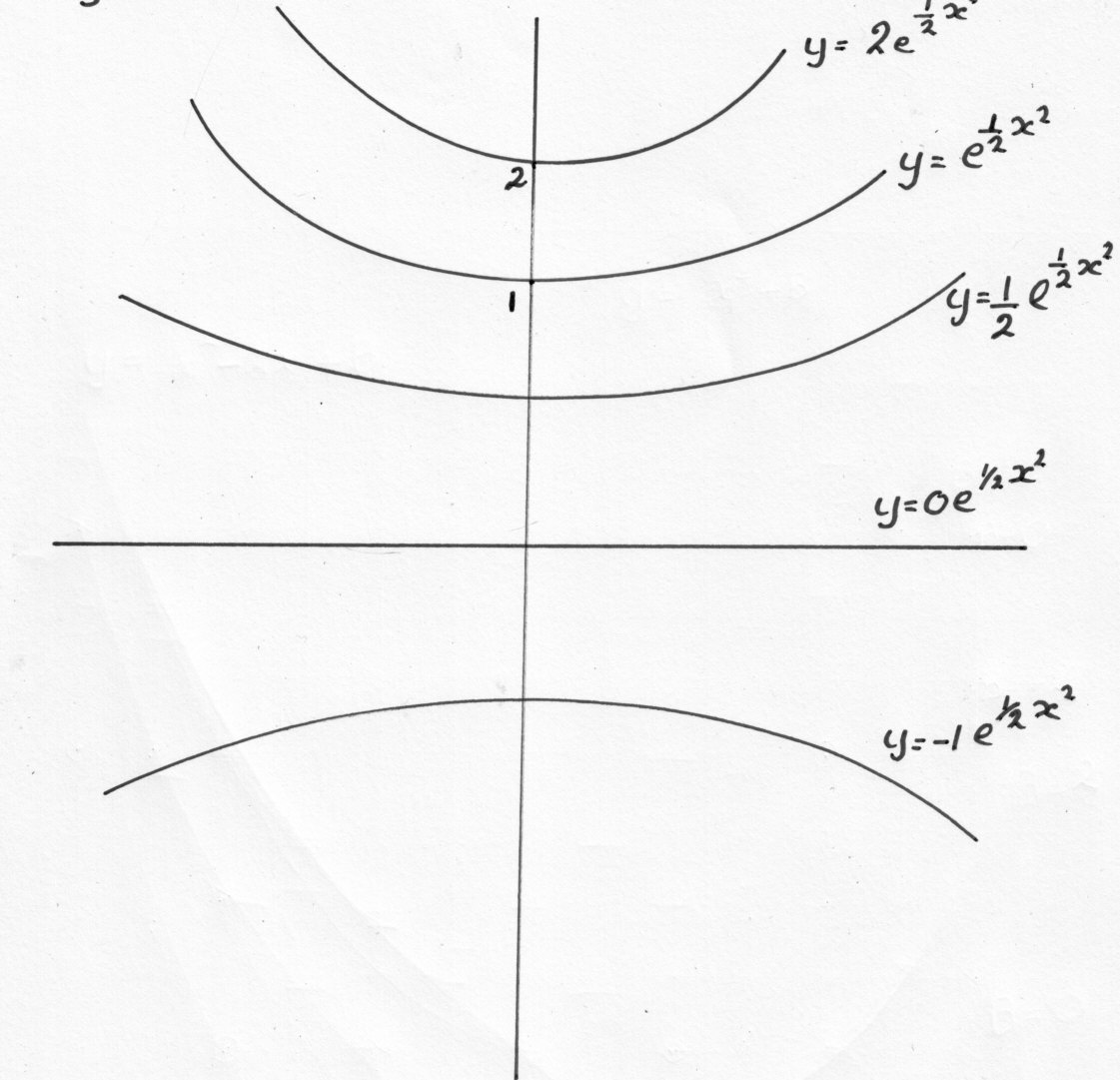
Now consider the equation
- If A = 0 the graph is as above.
- If A = 1 (16)
- If A = -2 (18)
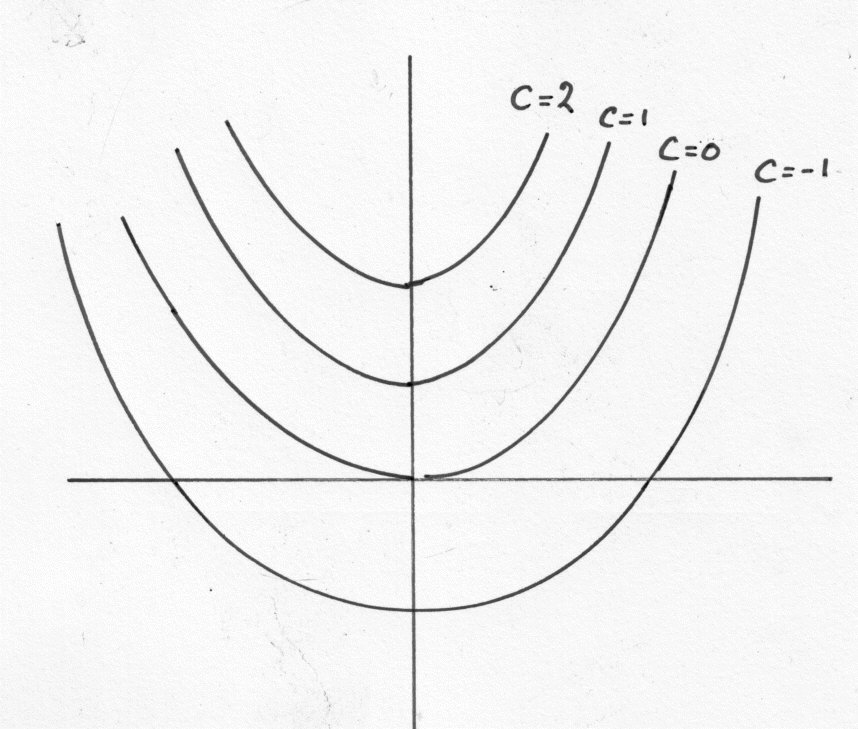
Now consider the following equation:-
This can be rearranged as:-
The variables have now been separated and :-
From which the explicit form is given by:-
The Formation of Differential Equations by Elimination.
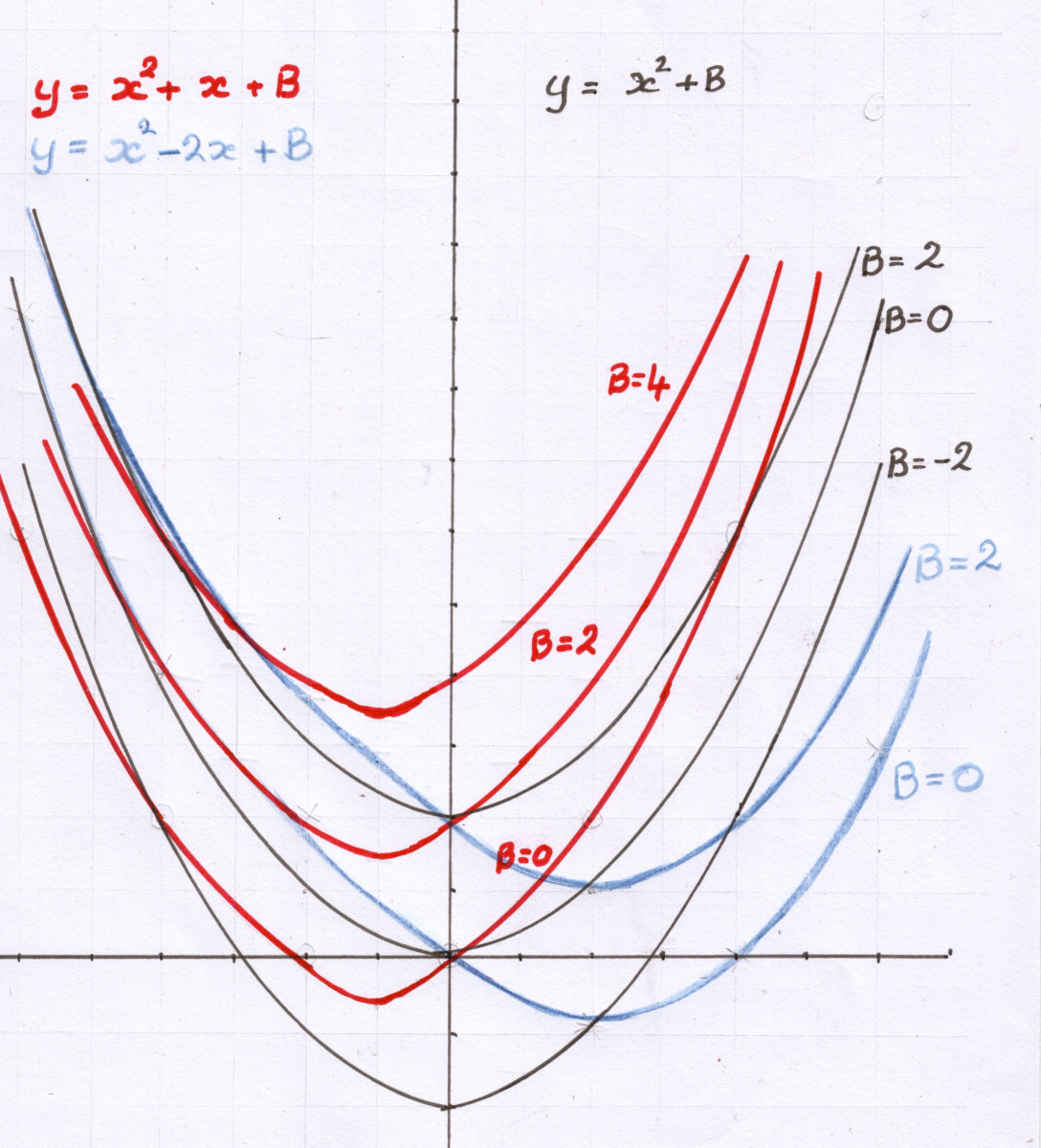
If from the following equation we eliminate the arbitrary constant we get the following:-
Extending this concept, if we started with "n" arbitrary constants, we could eliminate them by "n" differentiations. The result would be a differential equation of the order.
Conversley if we are given a differential equation of the order we can, in general, obtain an equivalent relationship containing no derivatives but n arbitrary constants. This relationship is called The General Solution
For Example
By integrating with respect to x
And so on until
Where A; B; C; E. are arbitrary constants
The Complete Primitive; Particular Integral; and Singular Solution.
The solution of a differential equation containing the full number of arbitrary constants is called The Complete Primative. Any solution derived from the complete Primitive by giving particular values to these constants is called a A Particular Integral
For example a Particular solution of is given by:-
The use of Differential Equations to Solve Problems in Dynamics
Example 2
A cricket ball is thrown vertically upwards with a velocity of v ft/sec. The retardation . Find the maximum height reached (Y) and the time of flight to the vertex (T).
Prove that the Initial velocity u is given by:-